

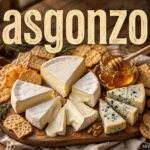






Masgonzola is a soft, creamy Italian cheese blend that sounds like a single cheese but is really two: mascarpone and gorgonzola. If you have never tried it, start with the taste: soft, buttery and mild, with a gentle blue tang.
What Is Masgonzola?
Mascarpone + Gorgonzola, in Plain Words
Masgonzola is a portmanteau of mascarpone and gorgonzola: “Mas” from mascarpone, “gonzola” from gorgonzola. It is typically fresh mascarpone layered or mixed with mild gorgonzola dolce, the younger, milder blue cheese, and in Italy it is sold as gorgonzola e mascarpone. The result is softer, richer and milder than gorgonzola alone: buttery and spreadable, with a gentle blue tang.
A Modern Short Name
The name masgonzola is a modern short name for the mix, not an old word from a cheese-making village. No single origin date or inventor is firmly documented. The idea is simple: take a strong blue cheese, soften it with fresh cream cheese, and you get something more people enjoy.
The Two Cheeses Inside It
Two cheeses make masgonzola what it is.
Mascarpone
Mascarpone is a fresh, soft Italian cheese made from cream: smooth, rich and barely tangy, with a texture close to thick whipped cream. It is the cheese in tiramisu, and it is used wherever a soft, mild creaminess is wanted. On its own it is gentle to the point of plainness, which is why it works in the blend: it carries the flavour of the blue cheese while softening its bite.
Gorgonzola Dolce
Gorgonzola is Italy’s famous blue cheese, made with cow’s milk and aged with blue mould. The dolce kind is the younger, milder version: soft, sweet and creamy, with a gentle blue flavour. The other kind, piccante, is aged longer and is firmer, sharper and crumblier. The blend uses dolce, not piccante, because it is soft enough to mix and mild enough to let the cream shine.
Masgonzola vs Gorgonzola vs Mascarpone
The three are related but not the same.
| Feature | Masgonzola | Gorgonzola | Mascarpone |
|---|---|---|---|
| What it is | A blend of the two | A blue cheese | A fresh cream cheese |
| Taste | Soft, buttery, gentle blue tang | Stronger blue, sharper | Mild, creamy, barely tangy |
| Texture | Soft and spreadable | Soft to crumbly | Smooth and spoonable |
| Blue mould | Yes, from the gorgonzola | Yes | No |
| Best for | Spreading and serving | Cheese boards, cooking | Desserts, sauces, spreading |
The blend sits between its parents: richer than mascarpone, gentler than gorgonzola. If you like blue cheese but find it too strong, this is the middle ground.
What Does Masgonzola Taste Like?
Masgonzola tastes softer and milder than gorgonzola alone, and richer than mascarpone alone. The first flavour is cream: buttery, smooth and full. Then comes the blue: a gentle tang that stays in the background. It is the kind of blue cheese that people who dislike blue cheese often enjoy, because the cream does most of the talking.
Taste, Texture and Smell
The texture is soft and spreadable, close to a thick cream cheese, and it spreads easily at room temperature. The smell is mild and milky with a faint blue-cheese note — not the strong, sharp smell of an aged blue. Served cold it is firmer and quieter; left out for twenty minutes it softens, and the flavour opens up. Taste it at room temperature, on plain bread, with nothing else competing.
How Masgonzola Is Made
Masgonzola is made by layering or mixing fresh mascarpone with mild gorgonzola dolce. The usual way is simple: a layer of mascarpone, a layer of gorgonzola dolce, then more mascarpone, pressed gently together so the two meet without being beaten into one paste. Some makers mix the two more fully into a single soft cheese. Either way, the cream softens the blue, and the blue gives the cream a character it does not have alone. There is no single official recipe, and the ratio varies from maker to maker. The gorgonzola inside it is a real, protected cheese; the blend itself has no official recipe.
How to Eat and Serve Masgonzola
It is at its best served simply, at room temperature, with something plain underneath it.
Spreads and Pairings
Spread it on crusty bread, crackers or a plain baguette, and let it be the main flavour. It pairs well with honey, walnuts, pears and figs — the sweetness and crunch balance the gentle blue tang. A light white wine or a sweet wine works with it. Keep the company simple: strong flavours will drown out the cream, and the cream is half the point.
Cooking With It
The blend melts into a smooth, rich sauce. Stir it into warm pasta, risotto or polenta, where it adds a gentle blue note without taking over. Spread it on a pizza base before baking, or spoon it over roasted vegetables. Use a little less than you think — the cream makes a small amount go a long way.
Storage
Keep it in the fridge, wrapped tightly, and use it within a few days of opening. It is a soft, fresh cheese, so it does not keep as long as a hard cheese. If it smells sharp or sour beyond its usual gentle tang, it is past its best. Do not freeze it: freezing breaks the soft texture and the cream turns grainy when it thaws.
Is Masgonzola a Real Cheese?
Masgonzola is a real cheese in the sense that it is made from real cheese, sold in shops, and eaten at tables — but it is not a protected cheese name of its own.
The PDO Verdict
No cheese authority lists the blend as its own type, and it has no single official recipe. Gorgonzola alone has PDO protection in the EU, granted in 1996 and protected in Italy since 1955: only cheese made in the right place, in the right way, can be sold as gorgonzola. The blend has no such protection — any maker can layer mascarpone and gorgonzola dolce and call the result by this name. That does not make it fake; it makes it a modern, unregulated blend.
Masgonzola as a Metaphor
Some writers also use the word as a metaphor for creative contrast: soft and bold at once, cream and blue in the same bite. It turns up in writing about food, design and even business. Keep it as what it is: a metaphor, not a definition. The cheese comes first.
Frequently Asked Questions
What is masgonzola?
It is a soft, creamy Italian cheese blend of mascarpone and gorgonzola dolce, usually layered or mixed together.
Is masgonzola a real cheese?
Yes, in the sense that it is made from real cheese and sold in shops — but it is not a protected cheese name of its own, and it has no single official recipe.
What does masgonzola taste like?
It tastes soft, buttery and mild, with a gentle blue tang. It is richer than mascarpone and much gentler than gorgonzola on its own.
How is masgonzola different from gorgonzola?
It is softer, creamier and milder than gorgonzola alone, because the mascarpone softens the blue flavour. Gorgonzola is the stronger, sharper parent cheese.
How do you eat masgonzola?
Spread it on crusty bread or crackers at room temperature, or stir it into pasta, risotto or polenta. It pairs well with honey, walnuts, pears and figs.
Where does masgonzola come from?
It is a modern Italian blend of mascarpone and gorgonzola dolce. No single origin date or inventor is firmly documented.
Conclusion
A soft cream cheese and a gentle blue cheese, layered together, make something neither one is alone: rich, mild and easy to enjoy. That is why the blend has fans even among people who avoid blue cheese.
Related reading: Intelligent Putty: What It Is, How It Works and Uses





One comment on “Masgonzola: Creamy Cheese, Taste and How to Use It”