






Asiago: The Thousand-Year Cheese With Two Different Faces
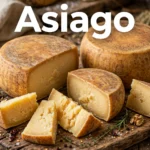
Asiago is a cheese that refuses to be one thing. Ask for it in a shop and you could be handed a soft, pale, mild cheese that is only a few weeks old — or a hard, crumbly, sharp one that has been ageing for more than a year. Both are asiago, both carry the same name, and both are protected by the same DOP. That is the first thing to understand about it: one name, two cheeses, and the difference between them is the whole story.
The cheese comes from the Asiago Plateau, the Altopiano dei Sette Comuni, in Veneto and Trentino in north-east Italy. Cheesemaking there traces to about the year 1000, when the milk came from sheep, and cows took over from the 1500s.
What Asiago Is — And Why There Are Two of Them
It is a cow’s-milk cheese from the Asiago Plateau, and the DOP that protects it covers two styles, not one. Most cheeses have one character. This one has two, and the name alone does not tell you which one you are getting.
The fresh style is Asiago Pressato, also called Fresco. It is pressed, mild and young, aged for 20 days or more, and it is the soft, pale cheese of the pair. The aged style is Asiago d’Allevo, also called Stagionato. It is sharp, firm and mature, and it comes in three ages of its own: Mezzano at four to six months, Vecchio at ten months or more, and Stravecchio at fifteen months or more.
The Plateau — A Thousand Years of Cheese
The plateau that gives the cheese its name is the Altopiano dei Sette Comuni, the plateau of the Seven Communities, in the mountains of Veneto and Trentino. Cheesemaking there goes back to about the year 1000, first with sheep’s milk, and cows took over from the 1500s.
The history matters because it explains the two faces. A cheese that has been made for a thousand years has had time to split into styles: a fresh one for eating young, and an aged one for keeping. The plateau kept both, and the DOP now protects both.
Pressato vs d’Allevo — Fresh vs Aged
The table below sets out the two styles and the three ages of the aged one, so the difference is easy to see at a glance.
| Style | Age | Texture | Taste | Use |
|---|---|---|---|---|
| Asiago Pressato / Fresco | 20+ days | Soft, smooth, supple | Mild, milky, gentle | Sliced and eaten fresh |
| Asiago d’Allevo — Mezzano | 4–6 months | Firmer, still sliceable | Fuller, more savoury | Sliced for the table |
| Asiago d’Allevo — Vecchio | 10+ months | Hard, crumbly | Sharp, nutty | Shaved or grated |
| Asiago d’Allevo — Stravecchio | 15+ months | Very hard, granular | Very sharp, intense | Grated over dishes |
Pressato is the cheese to buy when you want something mild. It is soft and smooth, it slices cleanly, and its taste is milky and gentle.
D’Allevo is the cheese to buy when you want something with bite. Mezzano, at four to six months, is firmer and fuller than Pressato. Vecchio, at ten months or more, is hard and crumbly with a sharp, nutty taste, and Stravecchio, at fifteen months or more, is very hard and granular.
The DOP Rule — Only Four Provinces Can Make It
Asiago is a protected cheese, and the protection has dates. It gained Italian DOP status in 1978, and EU PDO status in 1996. The protection means that only cheese made in the defined zone, under the defined rules, can be called Asiago.
The defined zone covers all of the provinces of Vicenza and Trento, and parts of the provinces of Padua and Treviso. Only milk from that zone can go into a cheese that carries the name, and a cheese made anywhere else is not Asiago under the rules.
That is why the common mistake matters. American “asiago” is not the same as Asiago DOP. The American cheese borrows the name, but it is not made in the defined zone and it is not covered by the DOP. When you buy the cheese, the DOP is the sign that you are getting the real one.
Asiago vs Parmesan — What Is Different
People often reach for asiago as though it were parmesan, and the two cheeses are not the same. The difference starts with the rules. Asiago is one name for two styles under a single DOP, a fresh cheese and an aged cheese, both from the same plateau. Parmesan has no fresh, mild twin waiting in the same DOP. That alone makes the two cheeses different kinds of thing: one is a pair, the other is not.
The other difference is the place. Asiago belongs to its plateau and its four provinces, and its identity is tied to that ground. A cheese defined by one plateau cannot be swapped for a cheese defined by somewhere else without changing the dish.
So the honest way to use it is to buy it for what it is. If you want the fresh, mild cheese, buy Pressato. If you want the aged, sharp cheese, buy d’Allevo and pick your age. Do not buy it as a stand-in for another cheese, because the two faces are the point, and neither of them is parmesan.
How to Buy and Use It
Buying the cheese starts with the label. Look for the DOP, and look for the style: Pressato or Fresco for the fresh one, d’Allevo or Stagionato for the aged one, with Mezzano, Vecchio or Stravecchio telling you how long the aged one has matured.
Use follows age. The fresh cheese is for slicing and eating as it is. A Mezzano at four to six months still slices; a Vecchio at ten months or more is better shaved; a Stravecchio at fifteen months or more is at its best grated.
Frequently Asked Questions
What is asiago?
It is a cow’s-milk cheese from the plateau in Veneto and Trentino, north-east Italy, protected by a DOP. One name covers two styles: fresh, mild Pressato and aged, sharp d’Allevo.
What is the difference between Pressato and d’Allevo?
Pressato, also called Fresco, is the fresh style: soft, mild and aged for 20 days or more. D’Allevo, also called Stagionato, is the aged style: firm and sharp, in three ages — Mezzano at 4–6 months, Vecchio at 10+ months and Stravecchio at 15+ months.
How old is the cheese?
Cheesemaking on the plateau traces to about the year 1000, first with sheep’s milk, with cows taking over from the 1500s.
Where can the real cheese be made?
Only in the defined DOP zone: all of the provinces of Vicenza and Trento, and parts of Padua and Treviso. Only milk from that zone can be used in a cheese called by that name.
When did the cheese gain DOP protection?
It gained Italian DOP status in 1978 and EU PDO status in 1996.
Is the American cheese the same?
No. The American cheese borrows the name but is not made in the defined zone and is not covered by the DOP.
Conclusion
It is one name with two faces: a fresh, mild Pressato aged for 20 days or more, and an aged, sharp d’Allevo that runs from Mezzano at four to six months to Stravecchio at fifteen months or more. Both come from the plateau, both are made from cow’s milk, and both are protected by a DOP that dates to 1978 in Italy and 1996 in the EU. Buy it by the label and pick the face you need.
Related reading: Bratwurst: The 1313 Sausage That Became Germany’s Grill Icon