
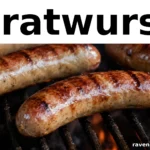







Bratwurst: The 1313 Sausage That Became Germany’s Grill Icon
Bratwurst is the sausage most people picture when they think of Germany. It is grilled at festivals, served in a bread roll with mustard, and eaten at Christmas markets across the country. It is also older than most people realise: the first written record of it dates to 1313, in Nuremberg, more than 700 years ago. This article explains what bratwurst is, what its name really means, why there are more than 40 varieties, and how it is cooked — and how it travelled from a medieval German city to the grills of Wisconsin.
What Bratwurst Is — And What the Name Really Means
Bratwurst is a German sausage, usually made from pork, sometimes with beef or veal mixed in. The meat is finely chopped, seasoned, and stuffed into a natural casing, then grilled or pan-fried. The seasoning is simple: salt, pepper, and regional spices, with marjoram the most famous. The sausage is fresh, not cured and not smoked, and it is always cooked before eating.
The name is older than the sausage’s fame, and it is often explained wrong. It comes from Old High German: brät-, meaning finely chopped meat, and Wurst, meaning sausage. So the name means “finely chopped meat sausage”, not “roast sausage”. Modern German links the first part to braten, to fry or roast, and that reading is common today, but the older meaning is the chopped meat. Both readings are worth stating, and the chopped-meat reading is the one the etymology supports.
That matters because the name tells you how the sausage is made. It is not a roast, and it is not a cured sausage. It is chopped meat, seasoned and cased, made to be grilled fresh. The name is a recipe in miniature, and it has been accurate for seven centuries.
1313, Nuremberg — The First Record
The first documented evidence of bratwurst dates to 1313, in Nuremberg. The record is a mention in a city document, and it is the earliest proof that the sausage existed in the form we know. Nuremberg was a major trading city in the Holy Roman Empire, and its butchers were famous for their sausages. The city’s sausage was small, thin and finely seasoned, and it is still made that way today.
40+ Varieties, One Sausage
There are over 40 regional varieties of bratwurst in Germany, and the table below gives the three most famous.
| Variety | Size and style | Seasoning and serving |
|---|---|---|
| Nürnberger Rostbratwurst | Small, thin, about the size of a finger | Marjoram, served in multiples of three |
| Thüringer Rostbratwurst | Longer, leaner, coarser | Marjoram, grilled over charcoal |
| Fränkische Bratwurst | Thicker, coarser, from Franconia | Marjoram and pepper, pan-fried or grilled |
The Nürnberger is the smallest and the most famous. It is about the size of a finger, and it is served in multiples — usually three, six or twelve — in a bread roll or on a plate with sauerkraut. The Thüringer is longer and leaner, with a coarser texture, and it is traditionally grilled over charcoal. The Fränkische, from Franconia, is thicker and coarser, and it is often pan-fried.
Three of the varieties are protected by law. Nürnberger Rostbratwurst, Thüringer Rostbratwurst and Fränkische Bratwurst all have PGI status — protected geographical indication — which means only sausages made in the right place, in the right way, can use the name. The protection is a sign of how seriously Germany takes the sausage, and how much the regional differences matter.
How It Is Cooked — Grilled or Pan-Fried, Never Eaten Raw
Bratwurst is cooked by grilling or pan-frying, and it is never eaten raw. The sausage is fresh, and the meat inside must be cooked through. The usual method is to grill it over medium heat, turning it often, until the skin is crisp and brown and the inside is hot. Pan-frying works the same way, in a little oil or butter, with the sausage turned until it is browned on all sides.
A good one has a natural casing that snaps when you bite it, and the meat inside is juicy, not dry. Keep the heat medium and turn it often.
Bratwurst in America — Wisconsin and the Grill
German immigrants brought it to the United States in the 1800s, and it became a staple in the Midwest, especially in Wisconsin. The state has a large German population, and the sausage is part of its food culture: grilled at tailgate parties, served at county fairs, and sold at brat stands across the state. Wisconsin’s version is often simmered in beer and onions before grilling, a local method that keeps the sausage moist and adds flavour.
The American version is bigger than the Nuremberg one and closer to the Thuringian or Franconian style. It is usually made from pork, sometimes with beef, and it is served in a longer bun with mustard, sauerkraut, onions and peppers. The grill is the same, and the occasion is the same: a casual, outdoor meal, eaten with the hands, with beer.
Bratwurst vs Other Sausages
It is often confused with other German sausages, and the differences are worth stating. A Weisswurst, the white sausage of Munich, is made from veal and pork, flavoured with parsley and lemon, and it is simmered in water, never grilled, and eaten before noon. A Currywurst is a bratwurst, or a similar sausage, that is sliced and covered in curry ketchup — it is a serving style, not a different sausage. A Bockwurst is a larger, milder sausage, usually smoked, and it is served with mustard and bread.
The key point is that it is a fresh sausage, made to be grilled or pan-fried. It is not cured, not smoked, and not simmered like a Weisswurst. Its flavour comes from the meat and the seasoning, especially marjoram, and from the grill. The other sausages have their own methods and their own histories, and the names are not interchangeable.
Frequently Asked Questions
What is bratwurst?
It is a German sausage, usually made from pork, sometimes with beef or veal, finely chopped, seasoned and stuffed into a casing, then grilled or pan-fried.
What does the name bratwurst mean?
It comes from Old High German brät-, meaning finely chopped meat, and Wurst, meaning sausage. It does not mean “roast sausage”, though modern German links it to braten, to fry or roast.
When was bratwurst first documented?
In 1313, in Nuremberg, in a city document. That is the earliest written evidence of the sausage, and Nuremberg still claims the oldest bratwurst.
How many types of bratwurst are there?
More than 40 regional varieties. The most famous are Nürnberger, Thüringer and Fränkische, and all three have PGI protected status.
How is bratwurst cooked?
Grilled or pan-fried over medium heat, turning often, until the skin is crisp and the inside is hot. It is never eaten raw.
What is the difference between bratwurst and other German sausages?
Bratwurst is a fresh sausage made to be grilled or fried. A Weisswurst is simmered and eaten before noon, and a Currywurst is one served sliced with curry ketchup.
Conclusion
Bratwurst is seven centuries old, and it is still the same sausage: finely chopped meat, seasoned and cased, grilled fresh and eaten in a roll with mustard. The name means chopped meat, not roast, and the first record is Nuremberg in 1313. There are more than 40 varieties, three of them protected by law, and the differences between them are real. The sausage travelled to America with German immigrants in the 1800s and became a Wisconsin staple, grilled at tailgates and fairs. It is a simple food, and it has lasted because it is good: meat, salt, marjoram, fire, and a roll.
Related reading: Picanha: Brazil’s Most Prized Steak and Its Fat-Cap Secret