





Picanha: Brazil’s Most Prized Steak and Its Fat-Cap Secret
Picanha is the most prized steak cut in Brazil, and one of the least understood outside it. It is a triangular cap of meat that sits on top of the rump, and it is cooked with a thick layer of fat left on. In Brazil it is the first cut carved at a churrascaria, the star of the grill, and the cut that Brazilians argue about most. Outside Brazil it is often sold under the wrong name, trimmed of the fat that makes it what it is, or confused with ordinary sirloin. This article explains what picanha is, why the fat cap matters, and how to buy and cook it properly.
What Picanha Is — The Cap on Top of the Rump
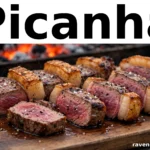
Picanha is the cap of the rump — the biceps femoris muscle, a triangular piece that sits on top of the rump, with a thick layer of fat on one side. A whole cut weighs about 1 to 1.5 kilograms, and it is the piece that Brazilian butchers separate from the rest of the rump with a few careful cuts. The shape is distinctive: a triangle with a fat cap on the wide side, tapering to a point.
In the United States the cut is usually sold as top sirloin cap, or by its French name, coulotte. In the United Kingdom and Australia it is called the rump cap. The butchery code for it is NAMP/IMPS 184D, which is the number a butcher uses to identify the exact cut. If a butcher does not know that number, it is a sign to shop elsewhere.
The Fat Cap Is the Whole Point
The fat cap is what makes picanha work. It is a thick layer, usually about a centimetre deep, left on the wide side of the cut. During cooking it renders slowly, basting the meat from the outside, and it crisps into a golden, crackling edge. The meat underneath stays juicy because the fat protects it from the heat.
Trimming the fat off before cooking ruins the cut. Without the cap, the meat dries out, loses flavour, and cooks like an ordinary piece of rump. The cap is not waste and not a garnish. It is the point of the cut, and it is the first thing a Brazilian butcher will defend.
The fat should be scored before cooking — cut in a crosshatch pattern, through the fat but not into the meat. Scoring helps the fat render evenly, stops the cut from curling on the grill, and lets the salt reach the meat. A whole cut is scored, salted and cooked in one piece, and only sliced after it rests.
What It Is Called Around the World
The same cut has different names in different countries, and the table below puts them side by side.
| Country | Name | Notes |
|---|---|---|
| Brazil | Picanha | The prized cut, grilled on skewers |
| United States | Top sirloin cap / coulotte | Often sold without the fat cap |
| United Kingdom | Rump cap | The same cut, different name |
| France | Culotte | The French name, also used in the US |
| Australia | Rump cap | The same cut, different name |
How Brazil Cooks It — Salt, Skewer, Open Fire
In Brazil, picanha is cooked simply. The whole cut is seasoned with coarse salt only — no pepper, no marinade, no rub. It is folded into a C-shape, fat-side out, and threaded onto a skewer. Then it is grilled over open fire, turning slowly, until the outside is crisp and the inside is rare to medium-rare.
The C-shape matters. Folding the cut puts the fat on the outside, where it can render and crisp, and it keeps the meat in a compact shape that cooks evenly. The skewer is the traditional tool of the churrascaria, the Brazilian steakhouse, where the waiter carries the skewer to the table and carves slices straight onto the plate.
How to Buy It Without Being Sold the Wrong Cut
Buying the cut is where most people go wrong. The cut is often mislabelled, and the rump is a large piece of meat with several parts that are not picanha. A real picanha is triangular, with a thick fat cap on one side, and it weighs about 1 to 1.5 kilograms. If the piece is large, flat and rectangular, it is probably the whole rump, not the cap.
Ask the butcher for the top sirloin cap, or for the cut by its code, 184D. Ask for the fat cap left on, at least a centimetre thick. If the butcher trims it off, or does not know what the cut is, find another butcher. A good butcher will know the cut, will leave the fat on, and will score it for you if you ask.
Picanha vs Sirloin — What Is Different
Picanha and sirloin come from the same part of the animal, but they are not the same cut. Sirloin is the larger primal, and picanha is the cap that sits on top of it. The sirloin is leaner, larger and more uniform. Picanha is smaller, fattier and more flavourful, and it cooks differently because of the fat cap.
The difference shows in the eating. Sirloin is a straightforward steak: lean, tender and mild. Picanha is richer, with a crisp fat edge and a deeper beef flavour, and it is at its best when it is cooked as a whole piece and sliced after resting. Treating it like sirloin — trimming the fat and cooking it as a single steak — wastes what makes it special.
Frequently Asked Questions
What is picanha?
It is the triangular cap of the rump, the biceps femoris muscle, with a thick fat cap left on. In Brazil it is the most prized steak cut.
Why is the fat cap important?
The fat renders during cooking, basting the meat and crisping into a golden edge. Trimming it off dries the meat out and removes the flavour that makes the cut special.
What is picanha called in the US?
Top sirloin cap, or coulotte. In the UK and Australia it is called the rump cap. The butchery code is NAMP/IMPS 184D.
How does Brazil cook picanha?
With coarse salt only, folded into a C-shape with the fat outside, threaded on a skewer and grilled over open fire, then carved at the table.
How do I buy real picanha?
Look for a triangular piece of about 1 to 1.5 kilograms with a thick fat cap. Ask for the top sirloin cap or the 184D cut, and make sure the fat is left on.
Is picanha the same as sirloin?
No. Picanha is the cap that sits on top of the sirloin primal. It is smaller, fattier and more flavourful, and it is cooked as a whole piece with the fat cap on.
Conclusion
Picanha is a simple cut with a simple rule: keep the fat cap on. It is the cap of the rump, tender because the muscle does little work, and flavourful because the fat renders and crisps as it cooks. Brazil cooks it with salt, a skewer and open fire, and carves it at the table. The rest of the world often gets it wrong — trimming the fat, using the wrong name, or selling the wrong cut. Buy the triangular piece with the thick fat cap, score it, salt it, and grill it fat-side out. That is the whole secret, and it is the reason Brazilians call it the best cut on the animal.
Related reading: Cappuccino: The Friar’s Robe That Named Your Morning Coffee



One comment on “Picanha: Brazil’s Most Prized Steak and Its Fat-Cap Secret”